An API token is a capability, not a harmless configuration value. Wherever the token can be read, someone may be able to exercise the permissions attached to it. A model integration also introduces a second boundary: prompts and outputs can contain information or instructions that should not automatically receive access to other systems. Secure integration requires attention to both boundaries.
This guide develops a practical review for Hugging Face API experiments and applications. It is not a certification, penetration test, or complete organizational security program. The goal is to eliminate predictable exposure paths, make permissions understandable, and ensure that a helpful development example does not become a route into unrelated data or actions.
Keep the token on a trusted side
A token embedded in browser JavaScript, static HTML, or a public repository is available to people who can access those materials. Do not rely on hiding a configuration panel, renaming a variable, or minifying a bundle. For local experimentation, read the token from an environment variable in a trusted terminal. For an application, use an appropriate server-side or managed secret boundary.
HFAPI.com's quickstart does not ask visitors to paste credentials into the website. The downloadable example is intended to run in an environment the user controls. Keep that distinction when adapting examples. A public demonstration should use synthetic content and nonsecret explanatory values, not a working credential that someone intends to replace after deployment. Temporary secrets can still cause real exposure while they remain valid.
Choose narrow permissions deliberately
The Hugging Face user access token documentation describes token roles and fine-grained permission options. Select the permissions needed by the actual integration rather than automatically using a broad credential. Access to a particular repository and permission to use an inference route are requirements to verify, not assumptions to inherit from another working script.
Separate environments
Separate credentials by environment and purpose where practical. An evaluation notebook should not share an unrestricted production token simply for convenience. Record the owner, intended use, creation context, and revocation procedure. Review permissions when the application changes. A credential that began as an experiment can otherwise outlive its original purpose and gradually become a dependency no one knows how to remove safely.
Treat logs as a second data store
Logs often receive information that was carefully protected elsewhere. Inspect application logging, HTTP debugging, error reporting, notebook output, and shared screenshots. Redact authorization headers and avoid recording full prompts by default. A stack trace or failed-request dump can include more sensitive information than the successful path. Test those paths deliberately with harmless fixtures.
Decide what metadata is actually needed for diagnosis. Request identifiers, model identifiers, response status, token counts, and timing can often answer operational questions without storing the entire content. Where content retention is necessary, establish access controls, purpose, and a retention policy appropriate to the deployment. Do not claim that your system is private merely because the main database is restricted while unrestricted logs contain copies of the same documents.
Minimize prompts before sending them
Send the information required for the task, not every field that happens to be available. Replace real personal or confidential data with synthetic examples during development. For production use, classify the data and review whether the chosen processing route is appropriate. A model's ability to accept a long context window is not a reason to send unrelated material.
Keep instructions separate from retrieved content in your application design, while recognizing that formatting alone does not create a complete security defense. Preserve the source and permission context of retrieved passages. Avoid including secrets in a prompt as a way to teach the model how to call a service. Tools should obtain credentials through controlled code paths, not through text the model can repeat in an answer or pass to another tool.
Treat model output as untrusted input
A generated command, SQL statement, URL, or code snippet should not be executed merely because it was returned in a valid schema. Validate the proposed action against an explicit permission policy. Use allowlisted operations and bounded arguments where the task permits them. Keep approval requirements outside the model's ability to waive them through persuasive text.
For generated code, use an isolated environment without unnecessary credentials, filesystem access, or network reach. Review dependency changes and external calls before execution. For extracted data, apply structural and semantic checks before writing to an authoritative system. The AI research workflow uses this boundary to prevent a research assistant from gaining authority over experiments or trades simply because it can generate plausible instructions.
Constrain tools more tightly than prose
A model that can call tools needs a capability boundary for each tool. Define allowed resources, permitted actions, maximum amounts or sizes where relevant, and which requests require human review. Validate these constraints in the application, not only in a system prompt. A textual instruction to “be careful” does not replace an authorization check.
Separate read-only research from state-changing actions. Avoid giving a summarization task permission to alter files or submit orders when it does not need those capabilities. Keep tool results and external documents in a lower-trust category than your application's authorization policy. Test malicious-looking instructions embedded in otherwise ordinary content. The purpose is not to eliminate every conceivable attack with one prompt, but to ensure that an unexpected instruction cannot cross a boundary it was never authorized to cross.
Plan for revocation before an exposure
Write a response procedure for a token appearing in a repository, screenshot, or log. Revoke the exposed credential, replace dependent configuration through an approved process, and investigate accessible usage records. Removing the visible copy alone does not make a leaked token secret again. Keep the response focused on both stopping future use and understanding what may already have occurred.
Test the replacement process with a nonproduction credential. Confirm that services fail in a controlled way when the old token no longer works, and that error messages do not expose the replacement. Identify who can authorize a rotation and who needs to know about the incident. A rehearsed procedure reduces the temptation to leave an exposed credential active because no one is certain which background job depends on it.
Review third-party processing explicitly
Document where requests are processed and which terms govern that route. Check retention, access, regional requirements, and any relevant provider-specific conditions before sending sensitive information. Do not infer these properties from a familiar model name or shared API format. The hosting comparison treats the data path as a decision criterion rather than an afterthought.
Keep fallback routes inside the same review boundary. A reliability feature that silently sends data to an unapproved provider can create a new exposure while attempting to solve an outage. Record which routes are permitted for which data classes. Where requirements cannot be satisfied, choose a different processing design or decline the task instead of weakening the requirement invisibly.
Make the security review reproducible
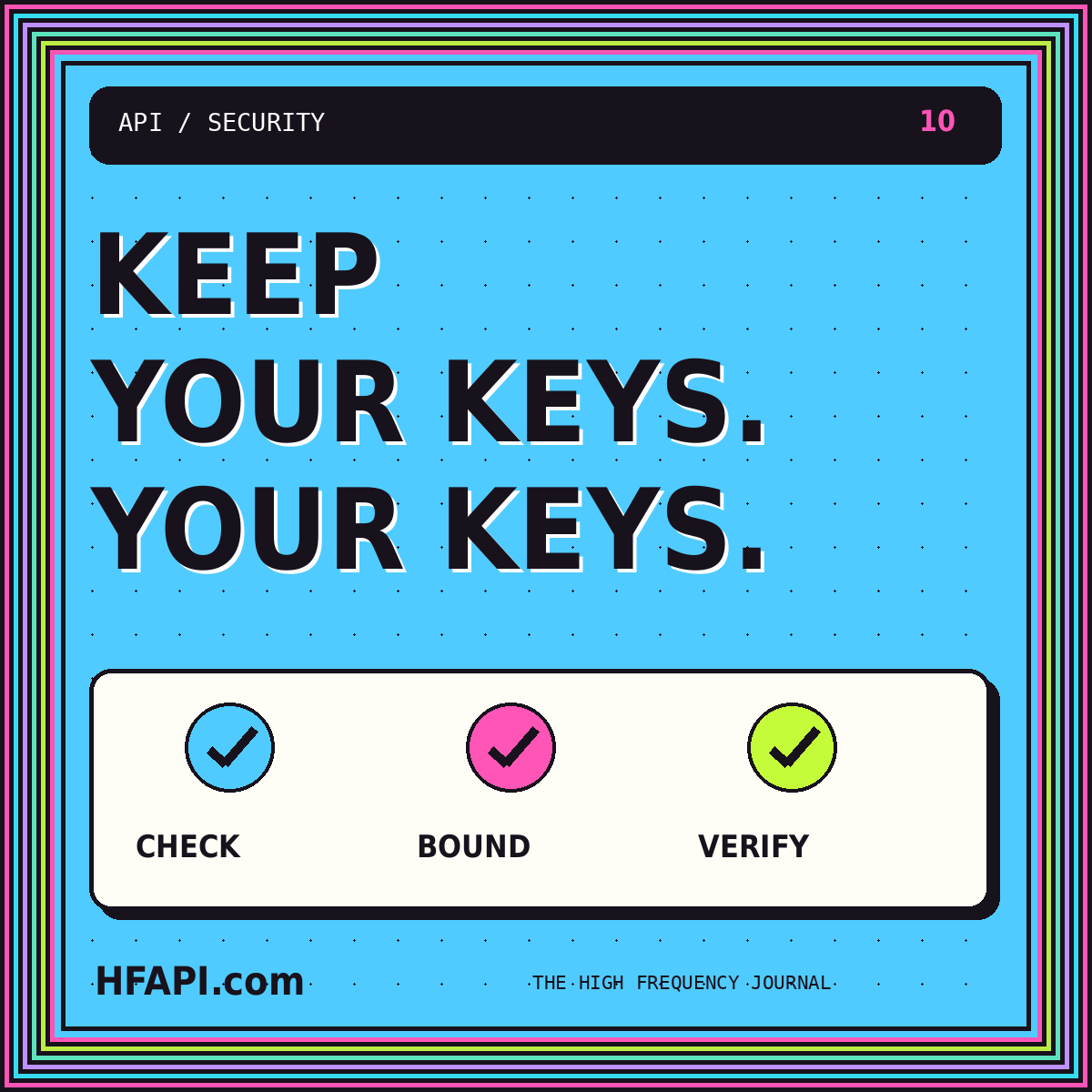
Create an acceptance record covering token location, permission scope, prompt minimization, logging, output validation, tool permissions, and revocation. Include the configuration revision and the person responsible for each unresolved issue. Test with an invalid token, a malformed response, an oversized input, a hostile retrieved passage, and a disconnected provider.
Keep the record short enough to maintain but specific enough to guide a future change. Repeat the relevant checks when introducing a new tool, provider, data source, or deployment environment. Security boundaries tend to erode through convenient exceptions, so document those exceptions with an owner and an expiry or review condition. A working integration should remain understandable after the engineer who built the first demo moves to another task.
Conclusion: protect capabilities and context
Secure model integration starts with narrow credentials on a trusted side, minimal prompts, careful logging, and output that earns authorization before it can act. Review the data path, constrain tools, and rehearse revocation. These controls support each other; no single setting makes the entire workflow safe.
Use the security checklist before adapting the Hugging Face API example. The practical standard is not whether a secret is difficult to notice. It is whether the application consistently limits who can read it, what it can authorize, and how quickly its authority can be removed when something goes wrong.